
Worried about protecting your structures from harsh chemicals in demanding environments? If you’re dealing with industrial spaces or any area exposed to chemical spills, moisture, or abrasion, you know how quickly damage can occur.
That’s where Chemical-resistant epoxy comes in—offering a tough, durable barrier to keep your floors, walls, and surfaces safe. With the right epoxy, you can shield your building from wear and tear, ensuring long-term durability and cutting down on costly repairs.
Are you curious about how this powerful solution works and how to apply it for the best results? Keep reading to discover the benefits, applications, and expert tips for using chemical-resistant epoxy in construction projects.
What is Chemical-resistant Epoxy?
Chemical-resistant epoxy is a specialized type formulated to withstand exposure to harmful chemicals, corrosive substances, and harsh environmental conditions.
It creates a durable, impermeable barrier that protects surfaces such as concrete, metal, and wood from degradation caused by chemical spills, acids, solvents, and other corrosive agents.
This makes it ideal for industrial construction, where floors, walls, and equipment are often exposed to harsh substances.
The unique formulation of chemical-resistant epoxy for construction provides protection and enhances the structural integrity of buildings. It can be applied in areas where standard materials break down, offering long-lasting resistance to wear and tear.
Its moisture and temperature resistance make it versatile for use in both indoor and outdoor settings, offering superior protection in high-traffic and chemically intensive environments.
Industries like manufacturing, food processing, and chemical plants can significantly reduce the risk of chemical damage and prolong the life of their structures by using the best chemical-resistant epoxy for flooring.
What Are Some Common Causes of Chemical Damage to Structures?
Chemical damage to structures typically results from exposure to corrosive agents like acids, solvents, and industrial chemicals.
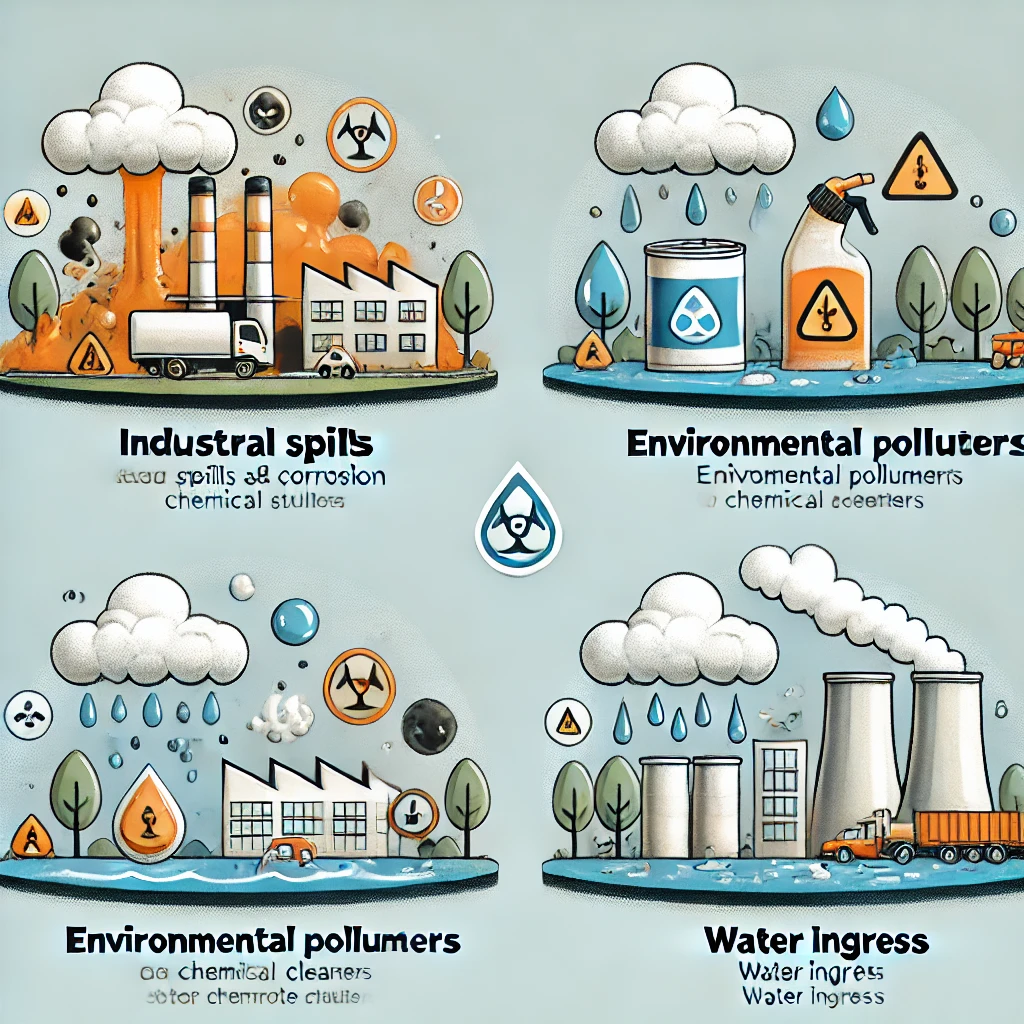
While there are many causes of chemical damage to various structures, the most common ones include industrial spills, corrosion, environmental pollutants, chemical cleaners, and water ingress.
1) Industrial Spills and Corrosion
Industrial environments are prone to chemical spills that can severely damage structural materials over time. When chemicals such as acids, solvents, or corrosive agents come into contact with surfaces like concrete or steel, they can penetrate and cause significant degradation.
Repeated exposure to these chemicals leads to corrosion, weakening the structural integrity of buildings.
This is particularly concerning in manufacturing plants, chemical facilities, and other high-risk industries. To combat this, chemical-resistant epoxy for industrial construction is often applied as a protective barrier, preventing the chemicals from damaging the underlying materials and ensuring long-lasting protection.
2) Environmental Pollutants
Environmental pollutants, including acid rain, industrial emissions, and airborne chemicals, can severely degrade construction materials. These pollutants often cause chemical reactions with surfaces like concrete and steel, leading to corrosion and structural weakening.
Structures exposed to outdoor conditions, particularly in urban or industrial areas, are at higher risk of damage from these pollutants.
To combat this, chemical-resistant epoxy for construction is applied as a protective layer, preventing chemical infiltration and preserving the integrity of the building materials. Using the best chemical-resistant epoxy for flooring and walls helps extend the lifespan of structures facing constant environmental exposure.
3) Chemical Cleaners
Frequent use of harsh chemical cleaners, especially in industrial settings, can cause significant wear and damage to structural surfaces like floors and walls. These cleaners often contain strong acids or solvents that degrade concrete, metal, and wood over time, leading to corrosion and surface deterioration.
Applying chemical-resistant epoxy for industrial construction can provide a protective barrier that prevents chemical infiltration in areas where chemical cleaners are regularly used.
Using high-performance chemical-resistant epoxy helps ensure that surfaces remain resilient, extending the lifespan of materials and reducing the need for costly repairs caused by chemical exposure.
4) Water Ingress
Water ingress can exacerbate chemical damage to structures, especially when exposed to corrosive substances. Moisture seeps into cracks and pores in concrete or other materials, carrying harmful chemicals that accelerate corrosion and material degradation.
Over time, this leads to structural weakening, cracking, and even failure. Applying chemical-resistant epoxy for construction creates a waterproof, durable barrier that prevents water and chemicals from penetrating surfaces.
This is particularly important for industrial settings where moisture exposure is high. Using the best chemical-resistant epoxy flooring helps protect structures from the combined effects of water and chemical damage, ensuring long-lasting protection.
What Are the Types of Chemical-resistant Epoxies?

While there are various types of epoxies, chemical-resistant epoxies are one of a kind. With their enhanced durability and protection, they can prolong the life of the structures that they are used in.
However, knowing which type of chemical-resistant epoxy is best suited to you is important. To assist you in that, let us discuss various types of chemical-resistant epoxies and their specific benefits:
1) Novolac Epoxy
Novolac epoxy is widely regarded as one of the most chemically resistant epoxies available, particularly against strong acids, solvents, and alkalis.
Its advanced formulation makes it highly effective in extreme industrial environments such as chemical processing plants, refineries, and wastewater treatment facilities where exposure to aggressive chemicals is routine.
Novolac epoxy creates a dense, cross-linked molecular structure that protects concrete, steel, and other surfaces exposed to corrosive agents. Its superior chemical resistance makes it the go-to choice for industries that deal with frequent spills or require long-term protection against chemical erosion.
2) Bisphenol-A (BPA) Epoxy
Bisphenol-A (BPA) epoxy is one of the most commonly used types of epoxy in industrial and commercial settings due to its strong adhesive properties and general chemical resistance.
It is particularly effective when floors and surfaces are exposed to mild to moderate chemicals, moisture, or general wear and tear. Often used in industrial flooring applications, BPA epoxy provides a solid, impermeable surface that resists moisture infiltration, chemical spills, and physical abrasion.
Its versatility makes it a popular choice for general construction projects requiring chemical protection without the extreme resistance required for more specialized environments.
3) Bisphenol-F (BPF) Epoxy
Bisphenol-F (BPF) epoxy is similar to Bisphenol-A epoxy but superior. It offers enhanced resistance to heat and temperature fluctuations, making it ideal for environments that combine chemical exposure with elevated temperatures.
Unlike BPA epoxy, BPF epoxy is less prone to crystallization, which can occur when exposed to fluctuating or high temperatures. This makes it a preferred choice for industrial applications where heat and chemical resistance are necessary.
BPF epoxy is commonly used in manufacturing plants, power plants, and other high-performance environments where materials must withstand aggressive chemicals and thermal stress.
4) Phenolic Epoxy
Phenolic epoxy is engineered to provide superior protection against highly corrosive chemicals, including concentrated acids and solvents, making it an ideal choice for industrial applications requiring high-performance protection.
This type of epoxy is often used to line tanks, pipes, and containment areas that store or transport highly corrosive substances. Its unique chemical formulation creates an incredibly durable, impermeable surface that resists chemical attack and corrosion over extended periods of time.
Phenolic epoxy is particularly well-suited for use in the chemical, pharmaceutical, and oil industries, where long-term exposure to aggressive substances is common.
5) Water-Based Epoxy
Water-based epoxy is an environmentally friendly alternative to solvent-based epoxies, offering lower volatile organic compound (VOC) emissions, making it safer for indoor use and more sustainable for projects where environmental impact is a concern.
Although it does not provide the same level of chemical resistance as solvent-based epoxies, water-based epoxy is suitable for light chemical protection, such as in residential garages, commercial floors, and areas with minimal chemical exposure.
Its ease of application, low odor, and quick drying time make it a popular choice for smaller projects or settings where eco-friendly solutions are a priority. Water-based epoxy is ideal for indoor environments where light chemical resistance and a durable finish are required without compromising air quality.
What Are the Key Benefits of Using Chemical-resistant Epoxy?
Chemical-resistant epoxy for construction provides several key benefits, including enhanced protection against chemicals, moisture, and physical wear.
It extends the lifespan of building materials, reduces maintenance costs, and safeguards structures in industrial and harsh environments, ensuring long-term durability and reliability for various applications. Let us discuss these benefits in detail:
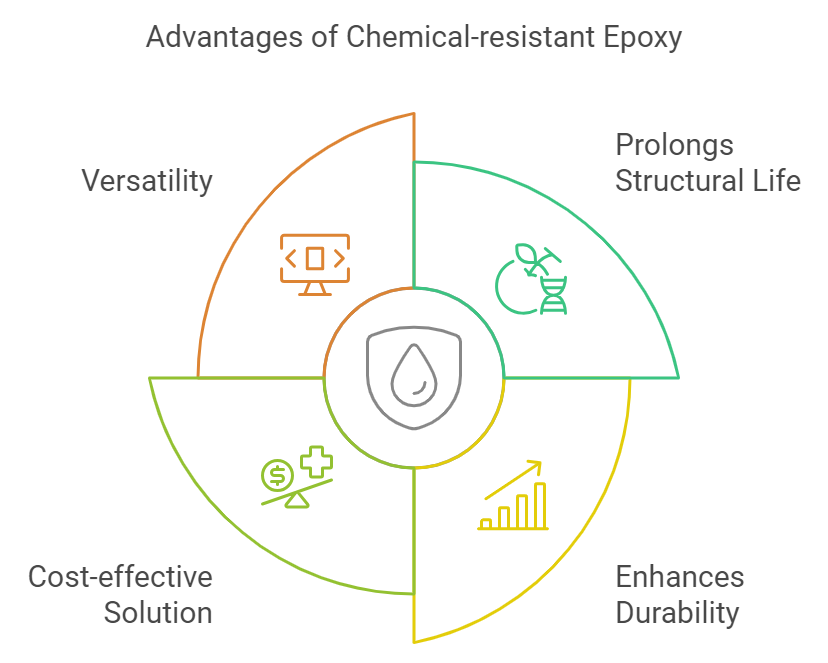
1) Prolongs Structural Life
One of the most important benefits of chemical-resistant epoxy for construction is its ability to significantly prolong structural materials’ life. By forming a tough, impermeable barrier, epoxy protects surfaces from chemical spills, moisture, and environmental pollutants that would otherwise cause deterioration.
This protection is essential in industrial environments where exposure to harsh chemicals and mechanical stress is common.
Using high-performance chemical-resistant epoxy prevents corrosion, cracking, and surface wear, ensuring that concrete and steel remain strong over time. This durability translates to fewer repairs, reduced maintenance costs, and longer-lasting infrastructure
2) Enhances Durability
Chemical-resistant epoxy for construction significantly enhances the durability of structural materials by providing a strong, resilient coating that resists chemical damage, moisture infiltration, and physical wear.
This epoxy creates a tough, abrasion-resistant surface capable of withstanding heavy traffic, harsh chemicals, and fluctuating environmental conditions.
In industrial settings, where exposure to corrosive substances and mechanical stress is frequent, using epoxy for chemical spill protection in construction ensures that floors, walls, and other critical surfaces remain intact.
By preventing cracking, corrosion, and surface degradation, high-performance chemical-resistant epoxy increases the structure’s overall resilience, extending its operational life and minimizing repair needs.
3) Cost-effective Solution
Chemical-resistant epoxy for construction offers a cost-effective solution by reducing long-term maintenance and repair expenses. Its ability to form a durable, protective barrier against chemicals, moisture, and abrasion means structures require fewer repairs and replacements over time.
By preventing corrosion, cracking, and surface degradation, epoxy extends the lifespan of construction materials, saving money on labor and material costs.
Using the best chemical-resistant epoxy for flooring in industrial environments minimizes downtime due to maintenance, improving overall operational efficiency. Investing in epoxy for chemical spill protection in construction ensures long-term savings by protecting vital surfaces from wear and damage.
4) Versatility
Chemical-resistant epoxy for construction is highly versatile, making it suitable for various applications across various industries. For industrial flooring, sealing concrete surfaces, or protecting walls from chemical exposure, epoxy adapts to different environments and material types.
Its ability to bond with concrete, steel, wood, and masonry makes it a go-to solution for diverse construction projects.
From epoxy for chemical spill protection in construction to outdoor applications requiring water and UV resistance, this material offers the flexibility to handle different structural needs, ensuring durable protection in residential and industrial settings.
Which Industries Benefit the Most From Chemical-resistant Epoxy?
Industries exposed to harsh chemicals and mechanical wear benefit the most from chemical-resistant epoxy for construction.
These include manufacturing plants, chemical processing facilities, food production, and pharmaceutical industries, where protecting surfaces from corrosion, spills, and abrasion is essential for maintaining operational efficiency and structural integrity.
If you want to learn more about how chemical-resistant epoxy benefits various industries, you should keep reading.
1) Manufacturing and Industrial Plants
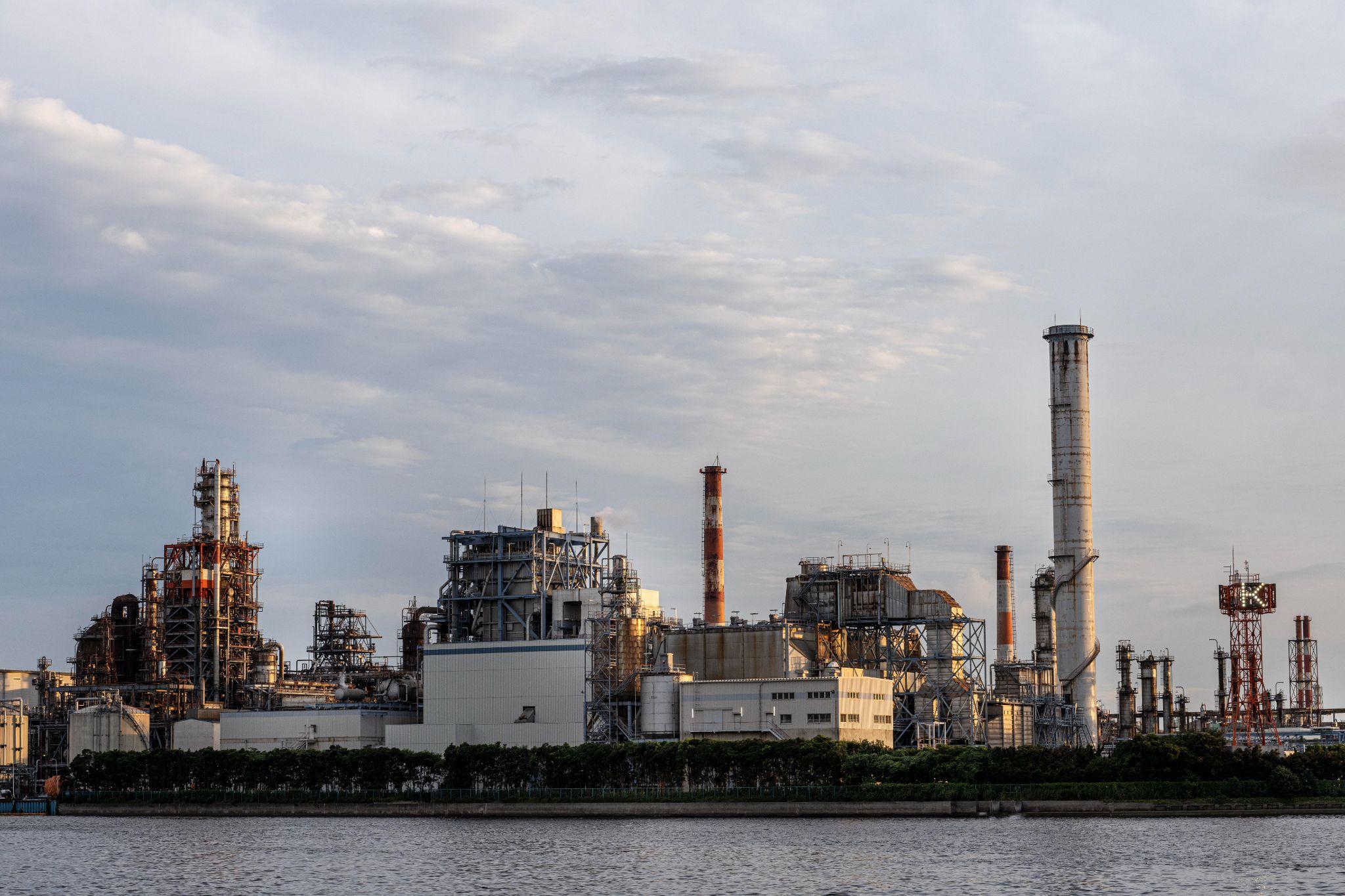
Manufacturing and industrial plants are among the top industries that benefit from chemical-resistant epoxy for construction. In these environments, floors and walls are often exposed to chemical spills, heavy machinery, and constant wear.
Surfaces can quickly deteriorate without proper protection, leading to costly repairs and operational downtime. These facilities can protect their infrastructure from corrosion and physical damage by applying high-performance chemical-resistant epoxy.
Epoxy creates a durable, impermeable barrier that shields surfaces from harsh chemicals and abrasions, ensuring long-lasting protection. This not only extends the lifespan of the materials but also minimizes maintenance costs and improves workplace safety.
2) Chemical Processing Plants
Chemical processing plants frequently expose structural surfaces to corrosive and harsh chemicals, putting them at high risk of damage. Applying epoxy for chemical spill protection in construction is essential for protecting floors, walls, and equipment from rapid degradation.
This epoxy creates a tough, impermeable layer that resists the infiltration of chemicals, ensuring that concrete and steel surfaces remain durable over time.
By using high-performance chemical-resistant epoxy, chemical processing facilities can significantly extend the life of their infrastructure, reducing the frequency of repairs and enhancing workplace safety in environments where spills and chemical exposure are common.
3) Food and Beverage Facilities
Food and beverage facilities benefit from chemical-resistant epoxy for construction due to frequent exposure to cleaning agents, moisture, and food acids that can degrade surfaces.
These facilities require durable flooring and wall protection that can withstand daily chemical cleaning without deteriorating.
High-performance chemical-resistant epoxy provides a protective barrier that resists chemicals, moisture, and abrasions, ensuring compliance with hygiene standards while extending the life of the facility’s infrastructure.
Food processing plants can use the best chemical-resistant epoxy for flooring to reduce maintenance costs and downtime while maintaining a safe, clean environment that meets industry regulations.
Parting Thoughts
Using chemical-resistant epoxy for construction is a crucial investment for industries exposed to harsh chemicals, moisture, and wear. This durable epoxy provides long-lasting protection, preventing corrosion, water ingress, and surface degradation in various environments.
Whether for chemical spill protection in industrial settings or enhanced durability in food processing plants, high-performance chemical-resistant epoxy extends the lifespan of materials, reduces maintenance costs, and improves safety.
Choosing the best chemical-resistant epoxy for flooring and other surfaces ensures that businesses keep their structures strong and resilient, even in the toughest environments.
For high-quality epoxy solutions built to last, contact JBH Chemical Ventures today!